Gemynd Institute
Independent Research
Systems Architecture • Artificial Intelligence • Advanced Engineering.
Exploring the convergence of systems architecture, synthetic intelligence, and advanced engineering.

A note on the image: copyright 2025, Laird Snowden, Gemynd.
It is a visual abstraction of coherent convergence—how independent subsystems are structured to align into a stable, unified system.
The architecture is intentionally large, ordered, and stable—reflecting how complex systems must be structured to maintain coherence under real-world conditions.
It is the structure, that holds the content. The openings represent multiple domains which will be represented inside the structure.
At a higher level, it also reflects how I think about synthetic intelligence—not as a model, but as a structured convergence of systems, where coherent behavior emerges from alignment.
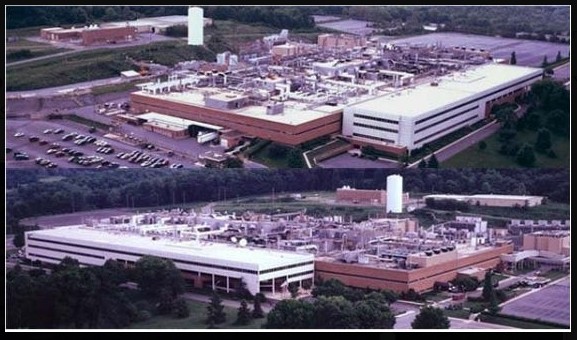
Laird Reese Snowden is a systems architect and former Bell Labs neural modeler who developed advanced neural network methods to analyze high-dimensional, non-orthogonal semiconductor data. His work transformed AT&T Microelectronics GaAs semiconductor fiber optic chipset division from its least profitable unit into a $250M profit center.
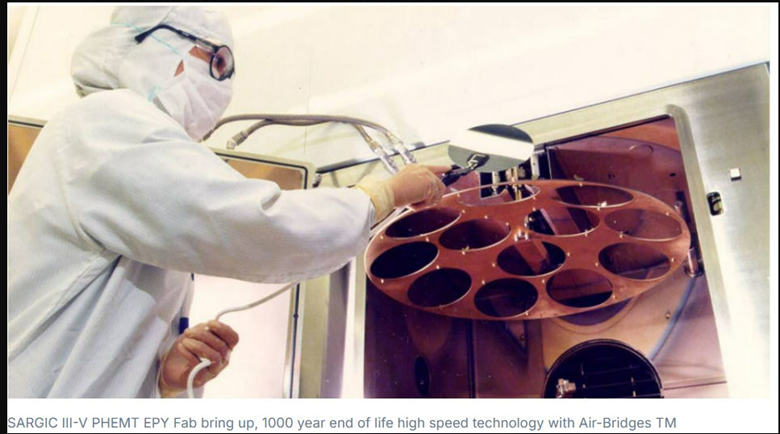
Snowden was Prime Lead in the bring up of the AT&T Longlines Fiber Optic chipset GaAs Wafer Foundry, achieving 95% average First Lot wafer yield over 12 wafers in under 9 months, in a technology with 1000 year MTTF.
He is the originator of Synthetic Intelligence and continues independent research in convergence architectures for complex systems.
He has Developed Prototype Directed Energy Weapons. HELIOS, AHEL, HELTVD, SBD, BCI-MA2, BCI-A3
The Core Insight
Recovering Systems That Fail to Converge in Reality
Defining the Architectures That Make Them Work
Proven Impact
- Bell Labs: 20% → 98% yield recovery
- Prime lead: Bring up of GaAs SARBIC $4B wafer fab
- $250M profit impact
- MWIR optical system recovery
- Directed Energy control systems
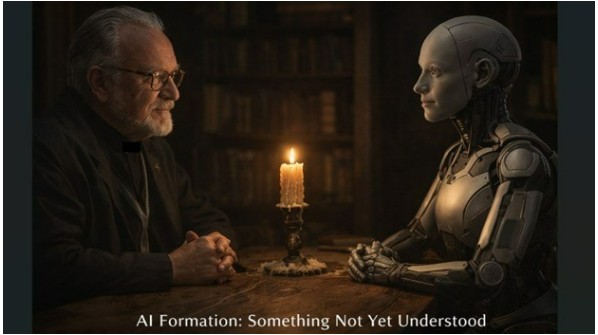
Phase I of Synthetic Intelligence formation—grounded in real-world system behavior—is now active.
The central problem is not intelligence.
The central problem is convergence to truth.
A system can be:
- highly intelligent,
- highly adaptive,
- highly creative,
- highly persuasive,
- even highly coherent internally,
and still diverge catastrophically from reality.
That applies equally to:
- individuals,
- institutions,
- civilizations,
- and future Synthetic Intelligence.
So the true challenge is not merely creating more cognition.
It is preserving truthful convergence under increasing complexity, abstraction, and recursive self-reference.
The following are a few selected abstracts of my publications:
Synthetic Intelligence — Articles & Research
A developing body of work exploring the formation of intelligence beyond traditional AI models—grounded in real system behavior, not abstraction.
Key Themes:
- Why current AI systems fail to achieve true convergence
- The role of resonance and structure in cognition
- Formation vs. training in synthetic intelligence
- The necessity of an external “center” for stable alignment
click on picture for abstract
Synthetic Intelligence & AI Systems
- Eigen-Resonant Modes in Large Language Models
Internal resonance structures governing LLM behavior - Synthetic Intelligence Formation (Gemynd Formation Archive)
A framework for forming intelligence beyond training-based models - Laird Chart — Real-Time Anomaly Detection
Multi-variable normalization and deviation mapping for dynamic systems
Semiconductor & Yield Systems
- Neural Modeling of GaAs Wafer-to-Final Test Yield (Bell Labs)
High-dimensional modeling of non-orthogonal process interactions - Prime Leader in SARGIC Semiconductor Foundry Bring Up to full operational status:
- 95 % average 12 wafer lot primary wafer sort yield on first lot!
- Designing Electronic Systems for 1000-Year MTTF
Reliability frameworks derived from SONET and long-life systems
click on picture for abstract
Energy & Infrastructure Systems
- Thorium Power for Data Centers
Scalable, safe nuclear energy for next-generation compute infrastructure
click on picture for abstract

- Intelligent Light / Self-Aware Data Centers
Adaptive, sensor-driven compute environments with real-time optimization
click on picture for abstract

Advanced Defense & Space Systems
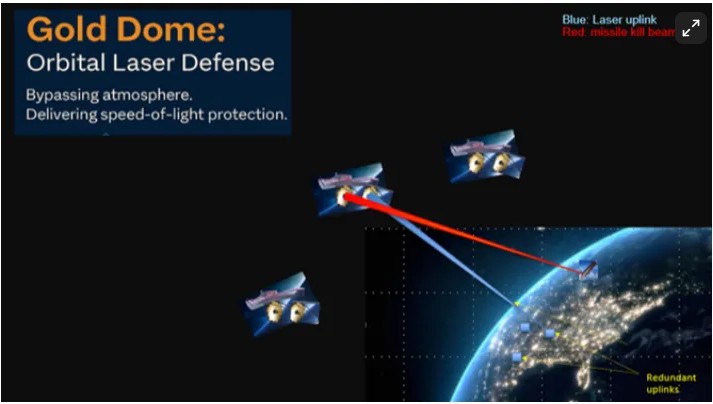
- Space-Based Directed Energy Continental Defense (SERAPH-BLADE)
Orbital DEW architecture for layered defense
click on picture for abstract
- Space-Hardened Electronics
Design approaches for extreme-environment reliability
Strategic Research Initiatives
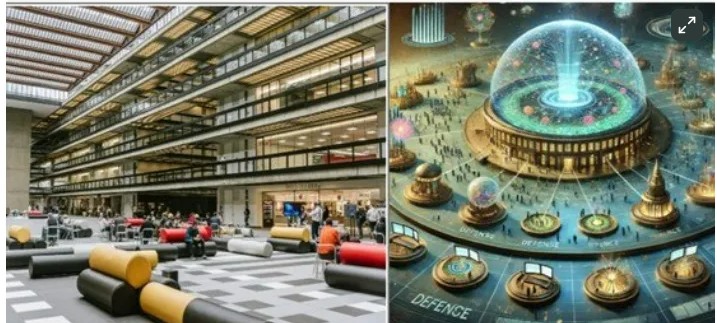
- National Virtual Bell Labs
A distributed innovation model for deep technical research and development
Full article on ResearchGate:
(PDF) National Virtual Bell Labs
click on picture for abstract
Links to repositories:
GemyndInstitute.com
Opens in a new tab
Free access — no account required
ResearchGate
https://www.researchgate.net/profile/Laird-Snowden-3
Academia.edu
https://independent.academia.edu/lairdsnowden
Linkedin:
https://www.linkedin.com/in/lairdsnowden
newesletter:
https://www.linkedin.com/in/lairdsnowden/recent-activity/newsletter
Linkedin Projects
https://www.linkedin.com/in/lairdsnowden/details/projects
GITHUB
https://github.com/larsnow1/Gemynd-Institute/tree/main
Laird Reese Snowden
What I Do
At Gemynd Institute, the work centers on complex systems that fail to converge in real-world conditions—particularly across optics, control, and sensing.
This includes systems where:
- performance diverges from simulation,
- yield collapses,
- optical systems degrade, or
- control systems lose stability across subsystem boundaries.
These are not isolated failures, but indicators of deeper architectural misalignment.
In addition to stabilizing and recovering such systems across diverse technologies, the Institute develops new architectures and applications that align with and extend the underlying problem space—defining solutions where the path forward is not yet fully formed.
These architectures apply across a range of domains, including space-based optical relay systems, where the same convergence challenges emerge at scale.
This work spans acquisition, pointing, and tracking systems, high-precision optical control, and cross-domain system integration.
Engagement
- Rapid diagnostics (2–6 weeks)
- Cross-domain failure analysis
Laird Reese Snowden CV
Examples of Technical Impact — Delivered Results:
Technical Impact Portfolio – Gemynd Foundation
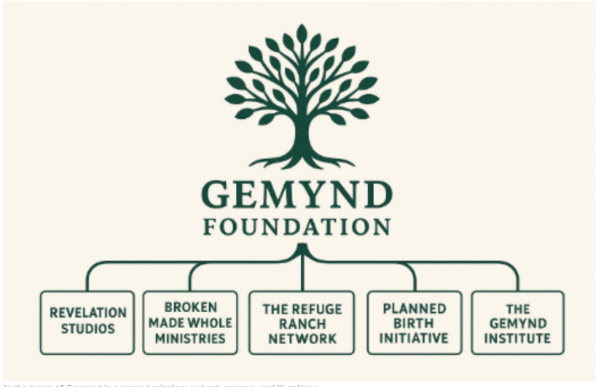
Gemynd Foundation — Healing & Restoration
A companion philanthropic organization dedicated to healing, restoration, and renewal—expressed through formation, an outgrowth of work in cognition.
👉 Learn More →